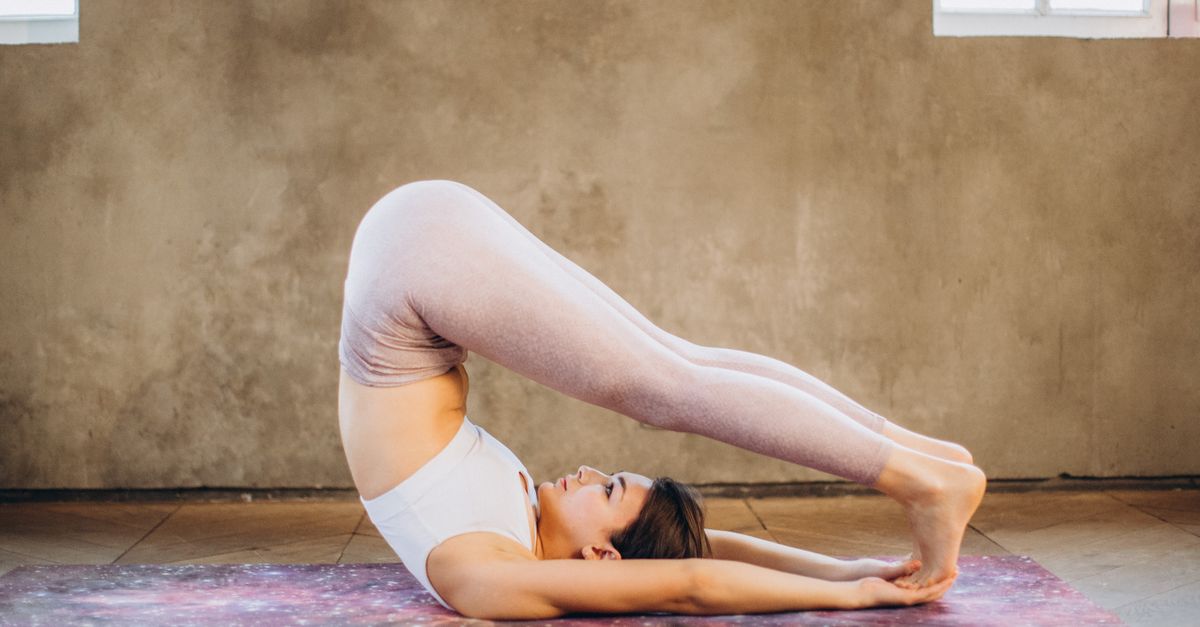
Why Your Yoga Practice Feels Stuck (And The 3 Crucial Shifts That Unlock Real Progress)
Are you showing up to your yoga mat day after day, going through the motions, but feeling like you’re not actually progressing? Perhaps you’ve been practicing for months, or even years, and the initial excitement has worn off. You might be able to hold a downward dog for a while, balance in tree pose, or even flow through a Vinyasa sequence, but there’s a nagging sense that you’ve hit a wall. You’re not getting stronger, more flexible, or feeling that deeper mental clarity you once experienced. In my years as a yoga instructor and practitioner, this is one of the most common frustrations I hear, and frankly, it’s one I’ve experienced myself. The mistake isn’t in your dedication, but often in how we approach progress itself in a practice like yoga.
Key Takeaways
- Stop chasing only visual flexibility and prioritize active stability to unlock deeper, safer ranges of motion.
- Shift your focus from external ‘perfect’ poses to internal interoception, sensing your body’s nuanced signals and limitations.
- Integrate targeted counter-movements and strengthening to balance traditional yoga postures and prevent plateaus or imbalances.
The Illusion of Flexibility: Why More Stretching Isn’t Always the Answer
When most people think of yoga progress, they envision deeper stretches, touching their toes with ease, or bending into impressive backbends. And yes, increased flexibility is certainly a component of yoga. However, the mistake I see most often, and one I made myself for years, is equating passive flexibility with true, functional mobility. You can passively stretch a muscle far beyond its active range, but without the strength to control that range, you’re not building resilience; you’re often increasing instability and potential for injury. For a long time, I could fold myself into deep forward bends, but my hamstrings were actually weak and unresponsive at those end ranges. What changed everything for me was understanding that active stability is the bedrock of sustainable flexibility.
Active stability means you have the strength to control a joint or limb throughout its full range of motion. It’s not just about how far your body can go, but how far you can confidently and safely take it using your own muscle power. For example, in a deep forward fold, can you actively engage your quadriceps to pull your kneecaps up, protecting your hamstrings, even when you’re at your deepest point? In a backbend, are you actively engaging your glutes and core to protect your lower back, or are you just collapsing into gravity? Without this active component, simply pushing into deeper stretches can make you feel temporarily more flexible, but it doesn’t build the lasting strength and control that truly unlocks new levels of your practice. My shift came when I started integrating more strength-focused elements into my routine – not just holding stretches, but actively pulling myself into and out of deeper ranges, engaging antagonist muscles to support the stretch. This built a kind of ‘scaffolding’ around my newfound flexibility, making it usable and safe.
Beyond the Mirror: Cultivating Interoception Over External Form
Another significant reason yoga practices get stuck is an over-reliance on external cues and visual perfection. We look at instructors, watch videos, or even glance in mirrors, trying to replicate a shape. While external alignment cues are important for safety and initial learning, true progress in yoga, in my experience, comes from developing interoception – the ability to sense the internal state of your body. This is a subtle but profound shift. For years, I was obsessed with how my poses looked. Was my back flat enough in Warrior III? Was my leg high enough in Half Moon? This external focus kept me locked in a cycle of comparison and striving, rather than truly listening to my body.
What changed everything for me was intentionally closing my eyes for significant portions of my practice, especially in poses I thought I knew well. I started asking myself: What do I actually feel here? Where is the tension? Where is the support? Am I breathing into the area that feels restricted, or am I holding my breath? This internal exploration allowed me to discover nuances in my own body that no external cue could provide. I realized that my ‘perfect’ looking pose might feel strained in one area, while a slightly modified, less aesthetically pleasing version felt stable and powerful. For instance, in a seated twist, instead of forcing my shoulder back to look deeper, I learned to sense the gentle rotation originating from my lower spine, allowing my breath to guide the depth. This shift moves you from performing yoga to experiencing yoga, and it’s where real, individualized growth happens. It empowers you to adjust your practice based on your unique body each day, rather than adhering to an arbitrary external ideal that may not serve you.
The Unsung Hero: Integrating Counter-Movements and Targeted Strengthening
Traditional yoga sequences are brilliant, but sometimes they can create patterns of movement and strength that, over time, lead to imbalances if not consciously addressed. For example, many Vinyasa flows emphasize pushing and extending, but can be lighter on pulling and concentric shortening of certain muscles. If your practice feels stuck, or you’re experiencing persistent tightness or niggles, the missing piece might be the deliberate integration of counter-movements and targeted strengthening outside of your regular flow.
Think about it: consistent forward folds stretch the back of the body, but what about strengthening the posterior chain in its shortened range? Lots of Chaturangas strengthen the chest and triceps, but how much pulling work are you doing for your back and biceps? In my own practice, I hit a plateau where my shoulders felt perpetually tight, and I struggled with inversions. The mistake I made was thinking more yoga was the only answer. What actually worked was introducing specific resistance training movements like rows, pull-aparts with a band, and even bicep curls, alongside my yoga. These weren’t ‘yoga poses,’ but they built the foundational strength in opposing muscle groups that then allowed me to access new depth and stability in my yoga practice. Similarly, after a deep backbend practice, a gentle counter-movement like a supine spinal twist or knees-to-chest can restore balance. This isn’t about abandoning yoga; it’s about making your yoga practice smarter by feeding it the complementary movements and strength it needs to truly flourish and prevent burnout or injury. It ensures you’re building a truly resilient, balanced body, not just a flexible one.
Frequently Asked Questions
Q: How do I know if I’m pushing too hard in my stretches without enough active stability?
A: A key indicator is whether you feel a sharp, uncomfortable stretch or a dull, achey sensation, especially the next day. If you release a stretch and your muscle immediately springs back with intense tightness, or you feel unstable when trying to hold a pose at its deepest point without support, you’re likely lacking active stability. Try to engage the muscles surrounding the joint or the antagonist muscles of the stretched area. For example, in a hamstring stretch, actively contract your quads. If you can’t maintain control, you’ve gone too far passively.
Q: What are some practical ways to develop better interoception in my yoga practice?
A: Start by dedicating a few minutes at the beginning or end of your practice to simply feel your body without judgment. Scan from your toes to your head, noticing sensations. During poses, periodically close your eyes and ask yourself specific questions: Where do I feel the most pressure? Where is my breath flowing? Is there any holding or gripping I can release? How does this pose feel different on my left side versus my right? The goal isn’t to fix anything initially, just to observe.
Q: Can you give examples of targeted strengthening exercises that complement a typical Vinyasa yoga practice?
A: Absolutely. For better shoulder stability and back strength, consider incorporating exercises like resistance band pull-aparts, dumbbell rows, and face pulls. For core strength beyond planks, try dead bugs, hollow body holds, or bird-dog variations. For glute activation, glute bridges or clam shells can be beneficial. These movements directly support common yoga postures and help create balance in your body. Aim for 2-3 sets of 10-15 repetitions a few times a week.
Q: I’m worried that adding non-yoga exercises will dilute my yoga practice. Is that a valid concern?
A: It’s a common concern, but in my experience, it’s unfounded. Think of it less as ‘diluting’ and more as ‘enhancing.’ Just as a musician practices scales to improve their performance of a symphony, supplementary training builds the physical foundation that allows your yoga practice to become richer, deeper, and more expressive. A stronger, more balanced body can explore poses with greater confidence, resilience, and mindful control, ultimately deepening the holistic experience of yoga.
Q: How long does it typically take to see progress with these shifts?
A: This is highly individual, but many students report feeling a difference in body awareness and subtle strength within a few weeks of consistent, intentional practice. More significant changes in flexibility and stability can take a few months. The key is consistency and patience. Remember, yoga is a journey, not a destination, and these shifts are about cultivating a more intelligent, sustainable, and joyful practice for the long term.
Written by Sarah Chen
Flexibility, mobility, injury prevention, yoga
A licensed physical therapist assistant and seasoned yoga instructor, Sarah specializes in mobility, injury prevention, and mindful movement.
You Might Also Like

Why Your Home Humidifier is Secretly Making You Sick (And What To Do Instead)
Discover why your humidifier might be harming your health and learn simple, effective solutions for healthier indoor air. Stop humidifier sickness now!

Why Your Strength Training Isn't Building Muscle (And The 3 Critical Mistakes I See Most Often)
Struggling to build muscle despite consistent strength training? Discover the 3 critical mistakes holding you back and learn what truly works.
Why Your Cardio Workouts Feel Ineffective (And The 3 Crucial Shifts That Changed Everything For My Endurance)
Stuck on a cardio plateau? Discover the 3 critical mistakes making your workouts ineffective and the shifts that will boost your endurance.